A Cradle of Black Culture, Leadership, and the Black National Anthem
Jacksonville has long been a center of African American culture, education, and leadership in Florida and the South. From the earliest days of Reconstruction through the Civil Rights Movement and beyond, Black residents shaped the city’s civic life, arts, and activism, leaving a legacy that continues to resonate today.
The city is the birthplace of James Weldon Johnson and John Rosamond Johnson, whose hymn “Lift Ev’ry Voice and Sing,” written and composed in Jacksonville in 1900, would become known as the Black National Anthem. Their work, along with the institutions that nurtured it, reflects Jacksonville’s role as a hub for Black intellectual, cultural, and political thought.
Jacksonville’s historic LaVilla neighborhood, once known as the “Harlem of the South,” emerged as a thriving African American community in the early to mid-20th century. Today, the Ritz Theatre and Museum preserves and interprets this history, honoring the musicians, performers, educators, and leaders who shaped Black life in the city and across the region.
Beyond the urban core, Kingsley Plantation offers a powerful and sobering window into the realities of enslavement and the enduring presence of the Gullah Geechee people along Florida’s Atlantic coast. As Florida’s oldest standing plantation house, the site connects Jacksonville to broader stories of forced labor, cultural survival, and generational resilience.
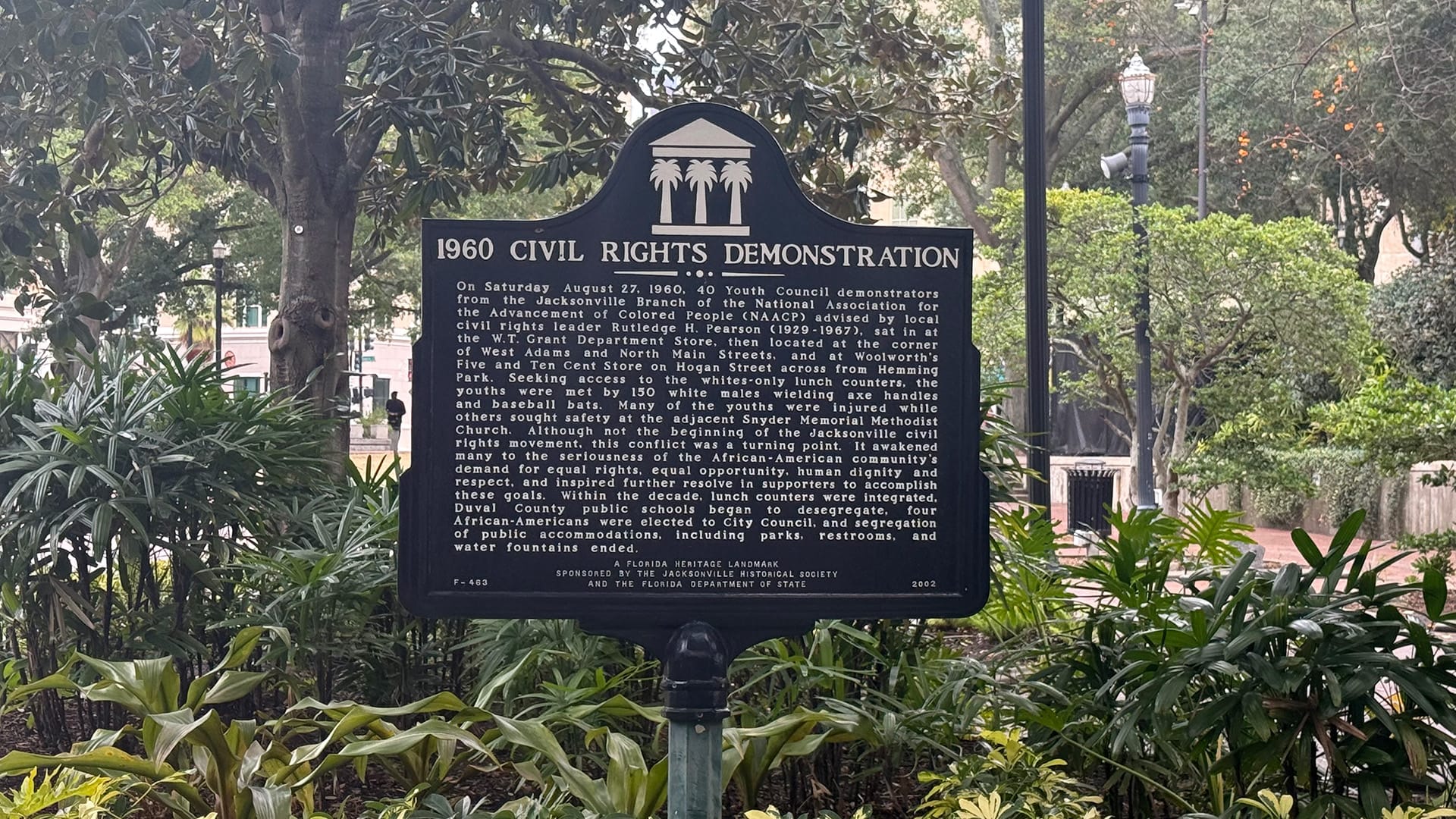
Together, these places tell a fuller story of Jacksonville, one rooted in struggle and creativity, oppression and achievement, and affirm the city’s lasting contribution to the American civil rights narrative.