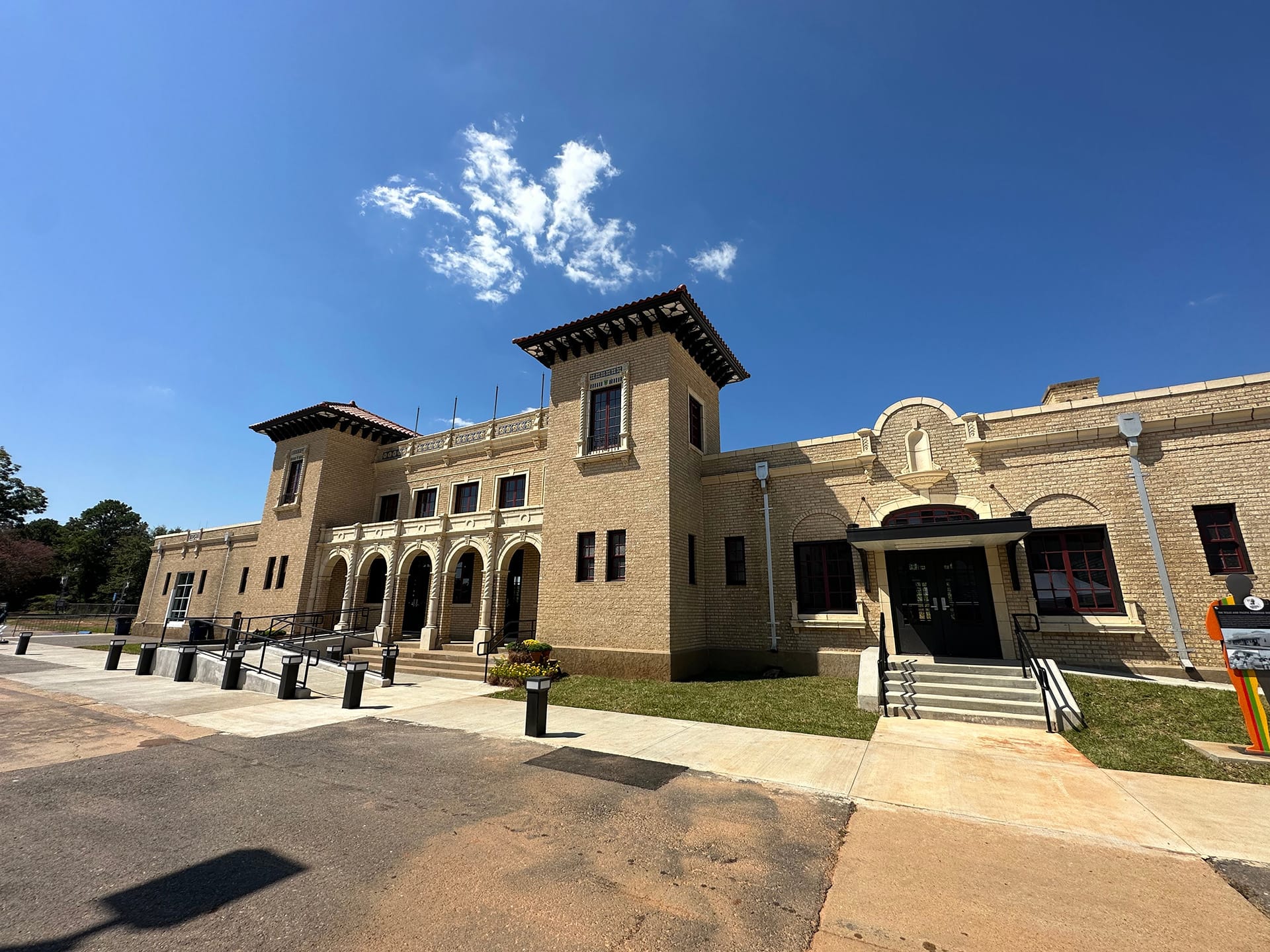
The Texas and Pacific Railway Depot in Natchitoches, Louisiana, is more than just a former train station; it’s a significant architectural and historical landmark that chronicles the city’s complex past. Completed in 1927, the depot was the culmination of decades of effort by Natchitoches citizens to secure vital rail access, shifting transportation from riverboats to trains and connecting the town to the broader regional network.
The depot is a distinctive blend of Italianate and Spanish Revival architectural styles, a common choice for grand railway stations of the era. The building is visually striking, featuring a terra-cotta tile roof, decorative cornice work and round-arched windows.
Despite its architectural beauty, the depot’s layout is a reminder of the Jim Crow era. It is one of the last and best-preserved examples of a segregated public building in Louisiana. The design enforced racial separation, featuring separate entrances, ticket windows, restrooms and waiting rooms for “white” and “colored” passengers.
The “white” waiting room was the largest and most ornate, boasting high ceilings, elegant carved wooden beams and rich finishes. Conversely, the “colored” waiting room was smaller, with a lower ceiling. A solid brick wall and the central ticket booth were physically positioned to divide and serve both separated sides.
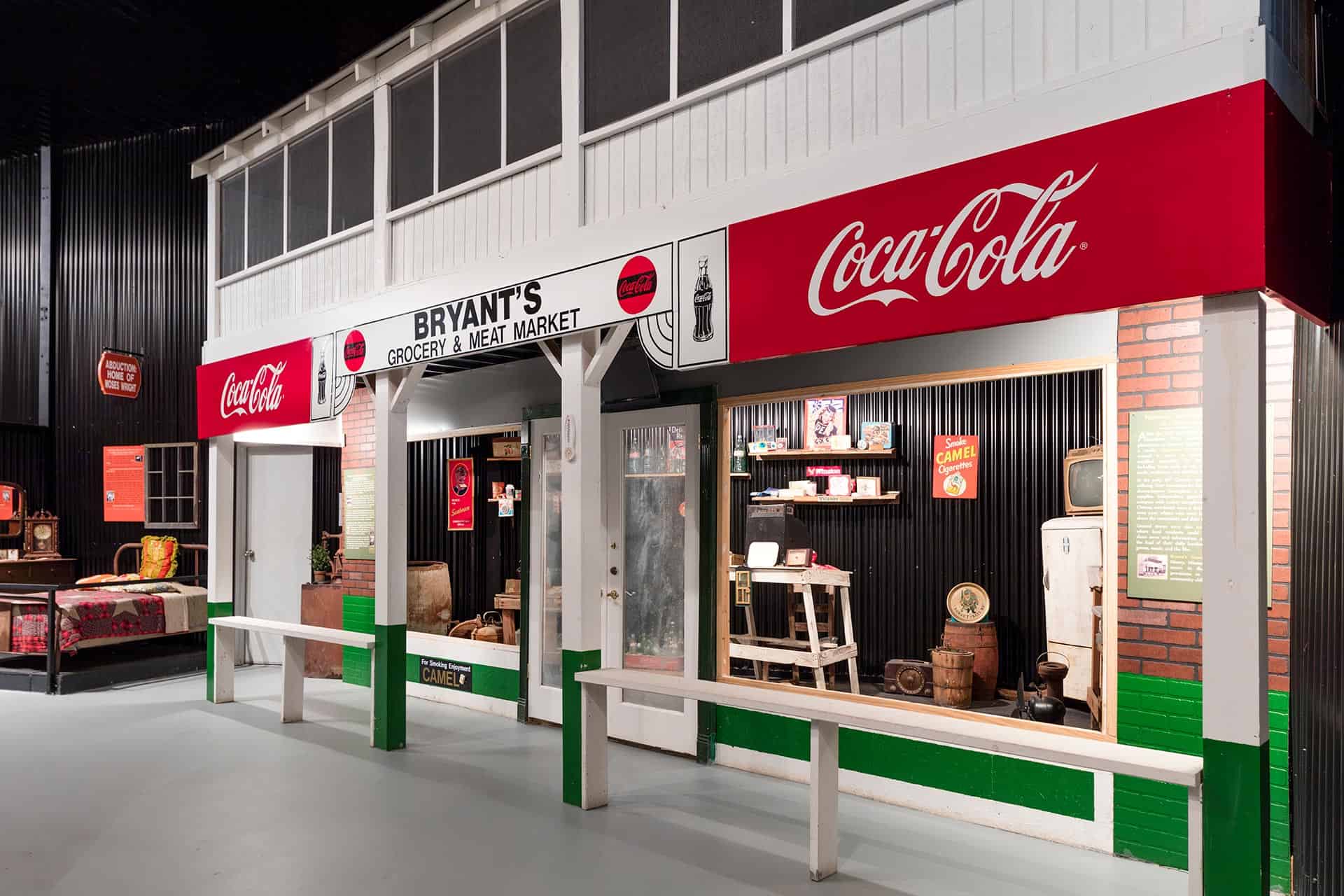
The depot quickly became the heart of the local African American community, situated directly across the street from the Black business district. While it represented the oppression of segregation, the rail line also offered a pathway to freedom, serving as a vital node in the Great Migration. Countless African Americans boarded trains here, seeking better opportunities, education and respite from the South’s racial violence and economic oppression in Northern and Western cities.
Regular passenger service ceased in 1965, a year after the passage of the Civil Rights Act. It fell into disrepair until the city of Natchitoches donated the structure in 1984.
Following decades of extensive preservation efforts, the depot was reborn. Today, it serves as the headquarters and visitor center for the Cane River Creole National Historical Park. The National Park Service has deliberately chosen to preserve the segregated floor plan and restore the “white” and “colored” signs. This powerful interpretive decision transforms the building from a mere historic structure into an active educational tool, teaching the history of segregation, the struggle for civil rights and the enduring resilience of the people who passed through its doors.
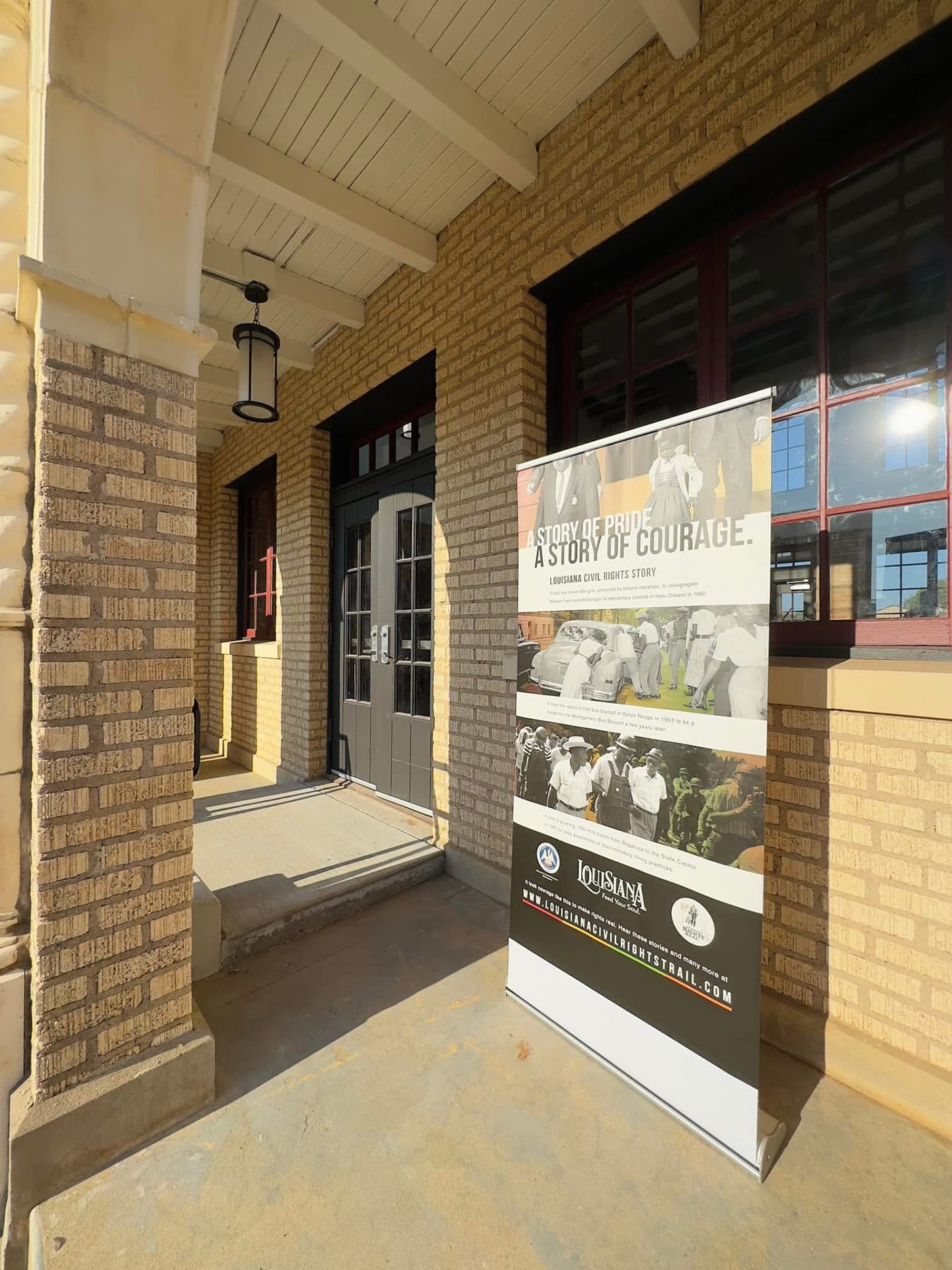
The Texas and Pacific Railway Depot is a crucial site for understanding the layered history of Natchitoches and the broader American South. The Texas and Pacific Railway Depot is the thirteenth site on the Louisiana Civil Rights Trail.